Women in Local Government in Wisconsin (2005–2025)
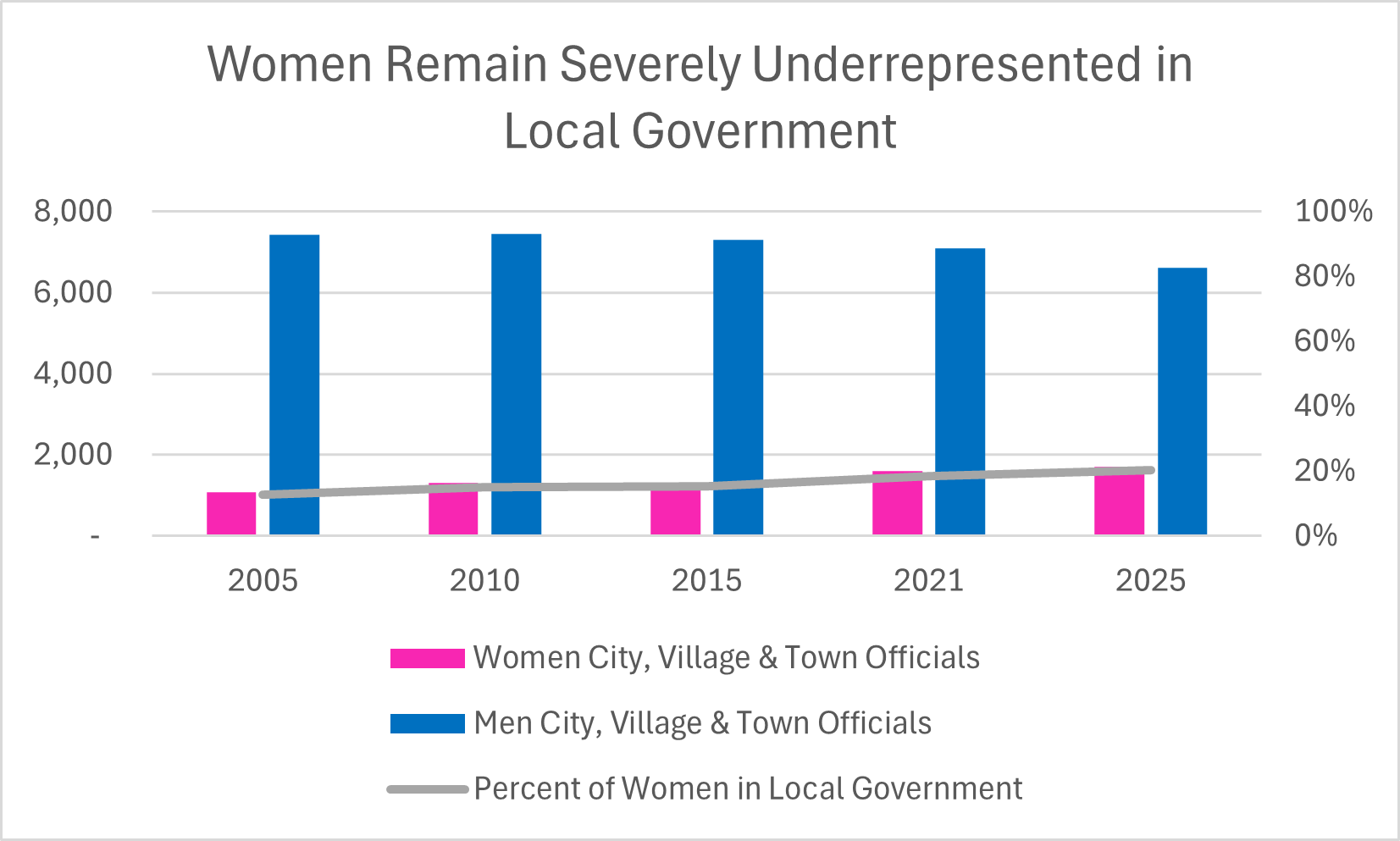
Women make up approximately half of Wisconsin’s population, yet they remain underrepresented in local elected office across the state. The charts on this page track women’s representation in key local government roles—mayors, city council members, village board presidents and trustees, and town board chairs and supervisors—from 2005 to 2025. Together, they show modest progress over two decades and underscore the continued gap between women’s share of the population and their presence in local decision-making.
Key Takeaways
Women’s representation in local government has increased since 2005, but gains have been gradual.
Women are more likely to serve in multi-member governing bodies than in single-seat executive offices.
No category of local government has reached gender parity.
These patterns mirror broader trends across Wisconsin government and highlight where targeted efforts are still needed.
Mayors: Persistent Gaps in Executive Leadership
Women’s representation among mayors increased from about 10% in 2005 to roughly 15% in 2025. While this reflects incremental progress, men continue to hold the vast majority of mayoral offices statewide.
Executive roles such as mayor often involve higher campaign costs, greater public scrutiny, and entrenched expectations about leadership. These structural barriers help explain why progress in mayoral representation has been slower than in legislative bodies.
City Councils: Stronger Gains, Continued Gaps
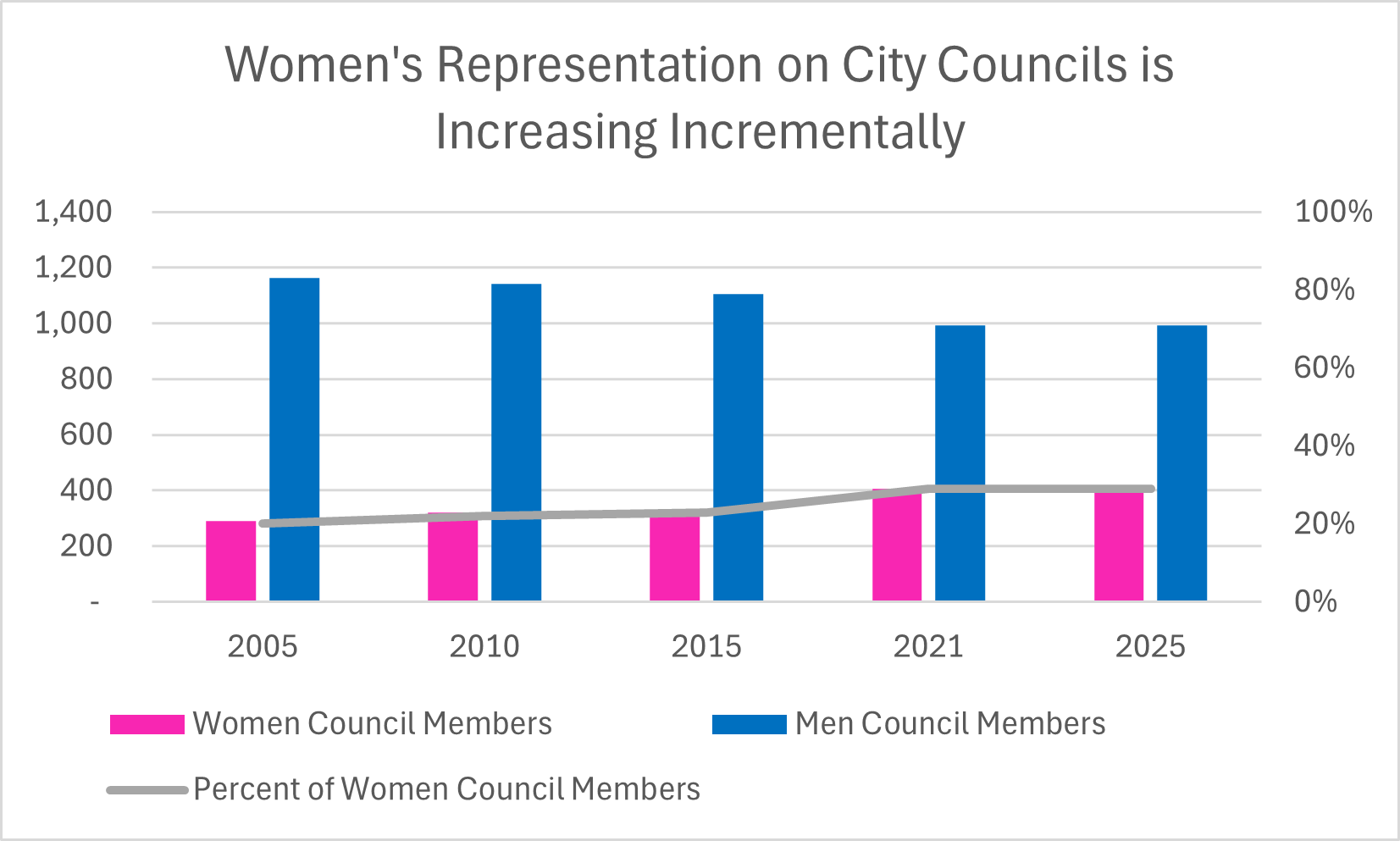
City councils have the highest levels of women’s representation among the local offices examined. Women held about 20% of city council seats in 2005, increasing to nearly 29% by 2025.
City councils often serve as entry points to public office and pipelines to higher leadership roles. Continued gains at this level are critical for strengthening women’s representation across Wisconsin’s political landscape.
Village Boards: Consistent, Steady Growth
Village boards show sustained improvement over the past two decades. Women’s representation increased from roughly 19% in 2005 to about 28% in 2025.
While still short of parity, this growth suggests that village governance may offer more accessible pathways into local leadership, particularly through collaborative, multi-member boards.
Town Boards: Limited Change Over Time
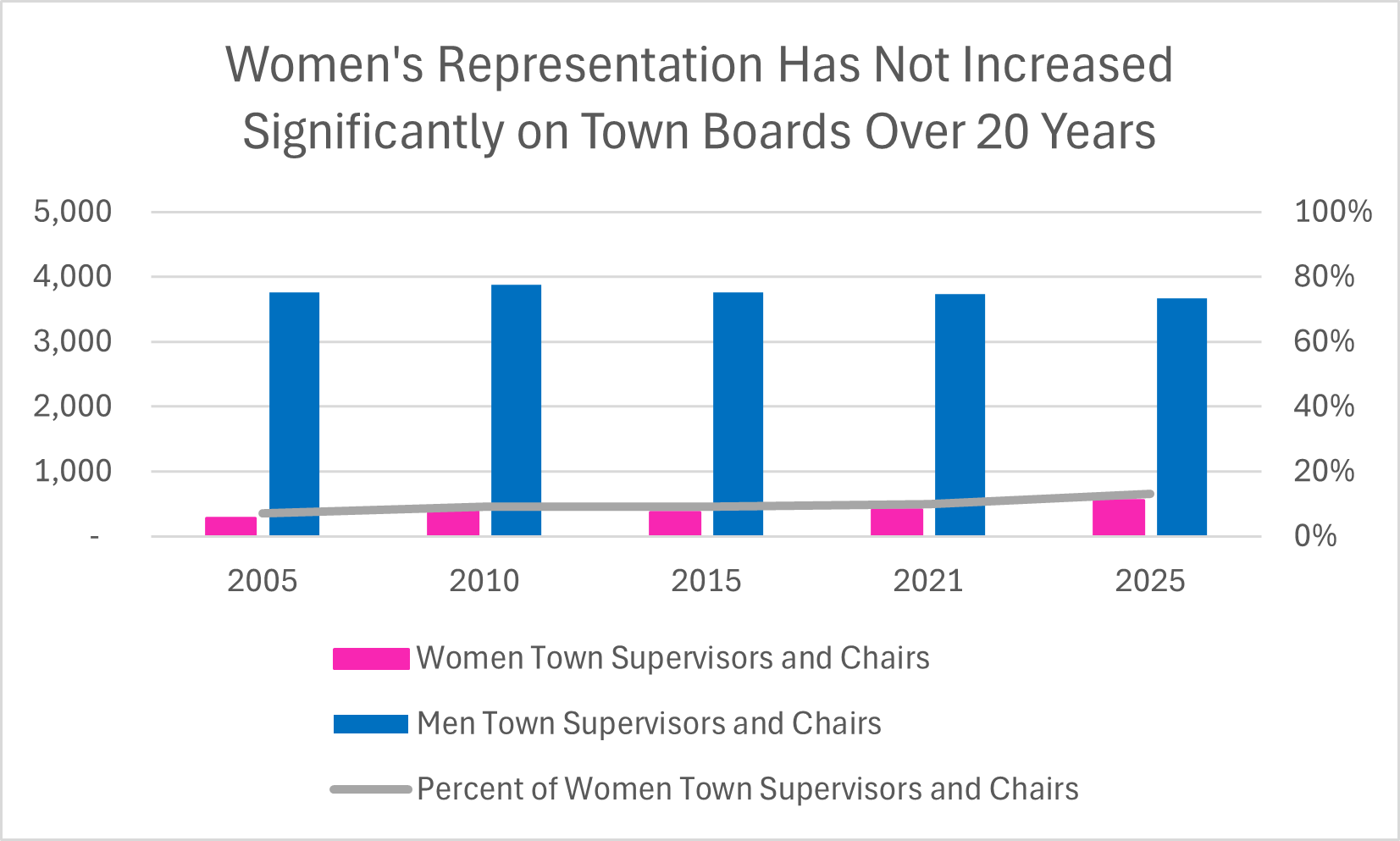
Town boards—including chairs and supervisors—remain the most male-dominated level of local government. Women’s representation increased from approximately 7% in 2005 to about 13% in 2025.
Town offices are frequently part-time and low-paid, with significant time demands. These conditions can limit who is able to serve and help explain why women’s representation at the town level has grown more slowly than in cities and villages.
Why Women’s Representation in Local Government Matters
Local governments shape policies that affect daily life, including public safety, infrastructure, housing, transportation, and community development. When women are underrepresented, decision-making bodies are less reflective of the communities they serve.
More gender-balanced local governments are associated with:
Stronger democratic legitimacy and public trust
Broader perspectives in policymaking
Policies that better reflect community needs